Subliem

Everything about SBI.

The programme, minors and masters, internships and the student councils. Click a topic to open it.

SBI programme

An overview of the Science, Business & Innovation programmes.

During the Bachelor and Master Science, Business and Innovation you learn to look at the world through a scientific, societal and economic lens. This is the result of following courses in science, social science and business administration, all of which are taught in SBI. This multidisciplinary programme is aimed at bridging the gap between science and business. This is put into practice by combining knowledge you gained in science courses and business courses, and applying it in a so-called innovation project. The science curriculum is geared towards sustainable energy and life sciences, as these are two fields in which innovation is extensive and transformational.

The programme offers you a unique mindset that is applicable to practically any company that touches on innovation, or if you want to kickstart your own startup. These skills are also central to the master’s programme. This programme offers two tracks: Energy & Sustainability of Life & Health.

The bachelor's course overview

This is how the bachelor Science, Business and Innovation is built up. Years 1 and 2 consist of compulsory courses; in year 3 you choose a minor and do an internship.

Course distribution

  • Project education and internship (30%): innovation projects on energy, medicines, alternative fuels, diagnostics and health
  • Science courses (30%): biochemistry, physics, thermodynamics, mathematics and statistics
  • Business and social science courses (20%): management and organisation, entrepreneurship and innovation, finance
  • Philosophy and minor (20%): free choice, for example econometrics, an education minor or management and innovation

Year 1

A broad, general foundation with courses such as sustainable energy, physics, biochemistry and a physics lab course. All courses are compulsory; there are no electives.

  • Value-driven innovating, researching and entrepreneurshipWaardegedreven innoveren, onderzoeken en ondernemen
  • Dutch language testTaaltoets NL
  • Lab safetyVeiligheid op het lab
  • Calculus
  • Science, Entrepreneurship & Digital Innovation
  • BiochemistryBiochemie
  • Innovation project medicinesInnovatieproject geneesmiddelen
  • Linear algebraLineaire Algebra
  • Organic & sustainable chemistryOrganische & Duurzame chemie
  • From molecule to medicineVan molecuul tot medicijn
  • Sustainable energyDuurzame energie
  • Entrepreneurship and innovationOndernemerschap en innovatie
  • Innovation project energyInnovatieproject energie

Year 2

A deepening of knowledge, insight and skills, including research, design and methodology, clinical diagnostics and imaging, thermodynamics and finance.

  • Research, design and methodologyOnderzoek ontwerp en methodologie
  • Strategic Management of Technology and Innovation
  • Clinical diagnostics and imagingKlinische diagnostiek en Imaging
  • Innovation project diagnostics & healthInnovatieproject diagnostiek & gezondheid
  • Basic programmingBasisvak programmeren
  • Socially responsible entrepreneurship and sustainabilityMaatschappelijk verantwoord ondernemen en duurzaamheid
  • Classical mechanics & thermodynamicsKlassieke Mechanica & Thermodynamica
  • Physics lab coursePracticum Natuurkunde
  • Finance I
  • Physics: electricity and magnetismFysica: electriciteit en magnetisme
  • Innovation project energy transitionInnovatieproject energietransitie

Year 3

You start with a minor of your choice, also possible abroad. In the second semester you do a research internship at a company: the bachelor project.

  • Minor of your choice (also possible abroad)
  • Bachelor project (research internship at a company)
  • Technology Assessment & Ethics in a Digital World

The complete course overview, with credits and periods, can be found in the VU Study Guide. Course titles are the official (Dutch) titles; English names are our own translation. Go to the Study Guide

Source: vu.nl, academic year 2026-2027

SBI Bachelor

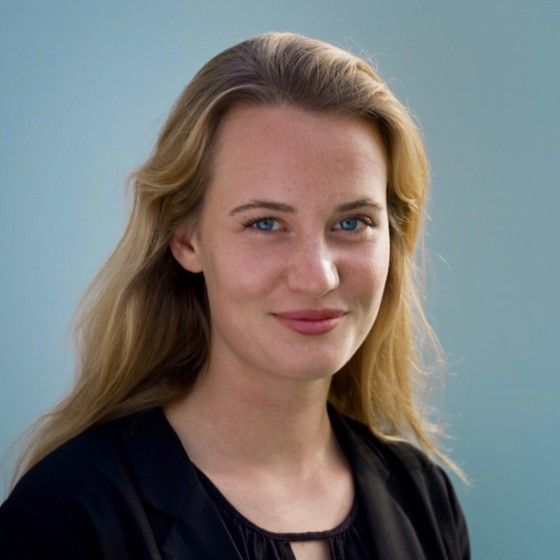
Maartje van Asselt
During my bachelor’s SBI I was able to develop myself in many different aspects. Not only is the curriculum very diverse, but there are many opportunities alongside your studies. Colleagues found startups, established companies show interest in SBI students and there are options to study abroad for an internship or an exchange. During the programme you learn that an entrepreneurial attitude brings you far, and this is directly applicable in the two projects you do every year!
Maartje van AsseltBsc Science, Business & Innovation

SBI Master

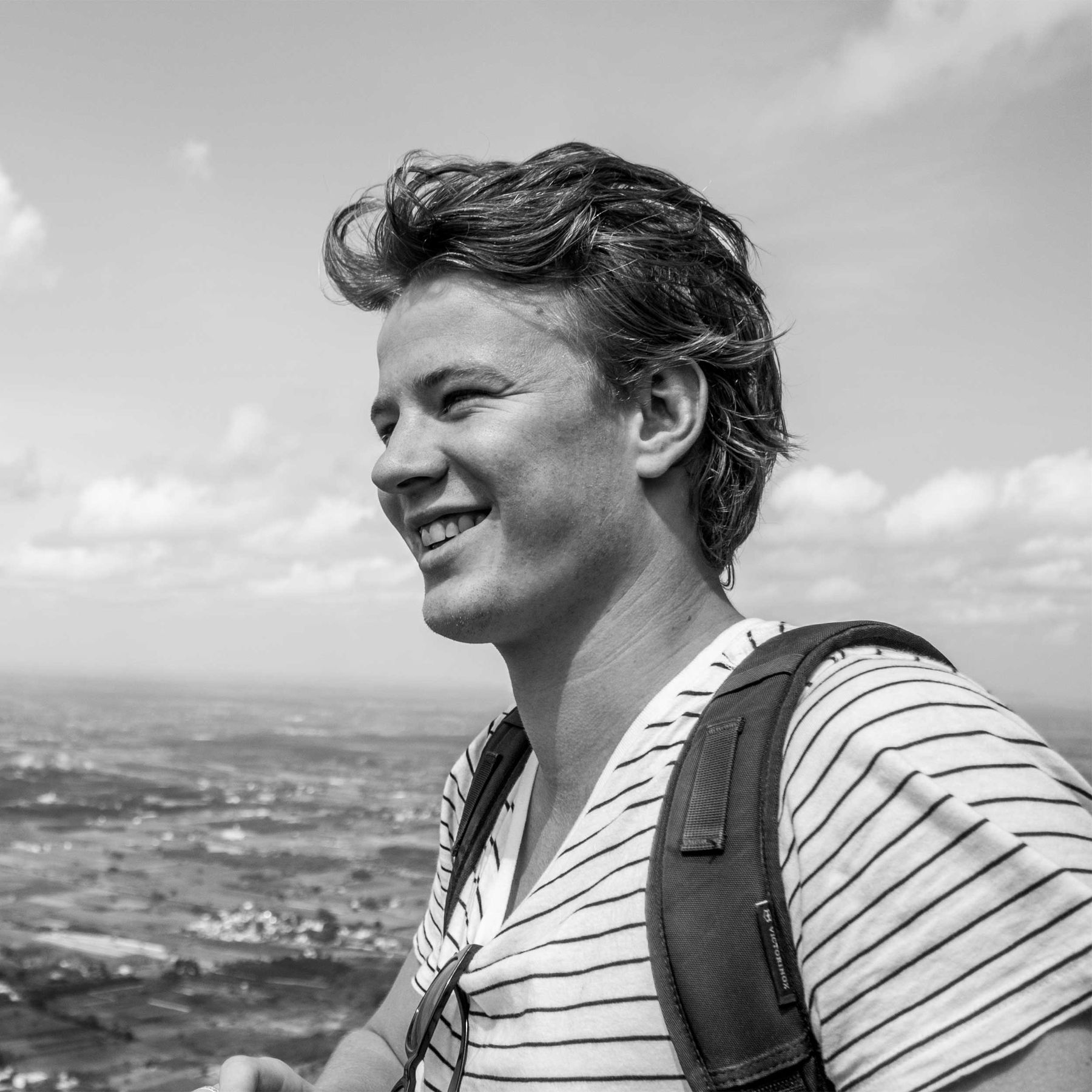
Wouter de Bruijn
Within the master SBI there are two tracks: the Life Science branch and the direction I picked, Energy Science. The master is reasonably comparable to the bachelor of SBI, which I also finished, but is a little faster paced and more in-depth. Besides, the master is entirely in English to cater to a large number of international students. One great benefit of this two-year master is the possibility to customice a large portion of the ECs with electives of your choice.
Wouter de BruijnMsc Science, Business & Innovation
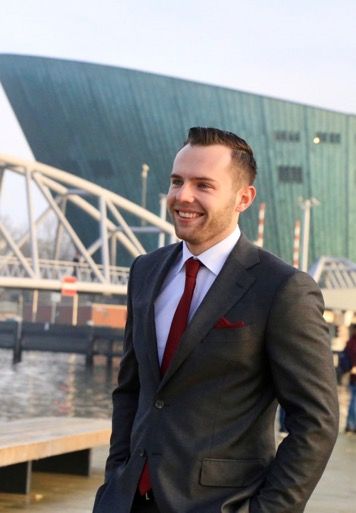
Arjan Woerdeman
The master SBI offers a large variety of courses, but also offers room to shape your curriculum according to your own interests. As such, I could pursue my personal ambitions and focus on the areas that I was really passionate about. Since the master combines theory and practicem you gain the know-how and experience that you need to further your career.
Arjan WoerdemanMsc Science, Business & Innovation

The master's course overview

The master Science, Business and Innovation takes two years (120 EC) and is taught in English. You work on scientific projects within Energy & Sustainability and Life & Health. In year 1 you follow common courses and a science project; in year 2 you do the SBI project and the master's thesis.

Year 1

Compulsory courses (60 EC)

  • Science ProjectFull year (from September) · 18 EC · XM_0180
  • BioSolar CellsP1 · 6 EC · X_428531
  • Business, Innovation and Value Creation in the Life Science IndustryP1 · 6 EC · X_432723
  • Digital Innovation: New Ways of Organizing and WorkingP2 · 6 EC · X_400653
  • Management of Sustainable InnovationP2 · 6 EC · E_DBI_MANSI
  • Current Sustainable Energy TechnologiesP3 · 6 EC · X_422582
  • Organizing in a Digital SocietyP5 · 6 EC · E_BA_ODS
  • Project Sustainable EcosystemsP6 · 6 EC · XM_0145

Year 2

Compulsory courses (48 EC)

  • SBI Project & Master ThesisFull year (from September) · 36 EC · X_432735
  • From Physics to PhysiologyP1 · 6 EC · X_430112
  • Principles of Drug DiscoveryP2 · 6 EC · XM_0106

Year 2

Electives

  • Management and Practice of ConsultingP1 · 6 EC · E_BA_MPC
  • Strategy Evaluation and AdviceP1 · 6 EC · E_BA_SEA
  • The Entrepreneurial VentureP1 · 6 EC · E_ENT_TEV
  • Environmental PolicyP2 · 6 EC · AM_468021
  • New Business Models and ConsultingP2 · 6 EC · E_BA_NBMC

All courses are taught in English. The complete overview can be found in the VU Study Guide. Go to the Study Guide

Source: studiegids.vu.nl, academic year 2026-2027

Minors & masters

A convenient overview of minors & masters for SBI students

Minors

Entrepreneurship

School of Business and Economics

This minor provides fundamental knowledge about what it takes to transform creative ideas into successful business ventures. Specifically, the minor will allow you to better appreciate different forms of entrepreneurship across different contexts, understand the unique challenges faced by entrepreneurs, and find creative solutions for overcoming these challenges. This knowledge is extremely valuable for any student, because career success increasingly requires that you are proactive, promote change, and pursue new entrepreneurial initiatives that create economic and/or social value.

Read more…

Sustainability: Global challenges, interdisciplinary solutions

Faculty of Science

Sustainability is the grand challenge of our time. This grand challenge urgently calls for the next generation of leaders that move beyond the classical focus on biophysical, economic or societal limits towards interdisciplinary and solution-oriented knowledge, providing realistic, context-specific pathways to a sustainable future. This minor aims to engage students from all backgrounds in issues of sustainability by making them acquainted to the three dimensions of sustainability (i.e. People, Planet, Prosperity) and challenging them to design and develop solutions within their own field of interest (i.e. energy, climate, water, waste, nature, food security). Students are encouraged to step outside of their personal mono-disciplinary comfort zone and learn about the strengths, weaknesses, opportunities and threats in the three pillars of sustainability. The students will learn how to identify and combine planetary opportunities that address the grand challenge from other disciplines, into innovative solutions for a more sustainable world.

Read more…

Understanding and influencing decisions in business and society

School of Business and Economics

This minor will allow you to understand and influence human decision making and choice, based on recent insights from behavioral economics and psychology.

Upon completion of this minor, you will be able to understand how people make decisions and how they are influenced by the situation around them. Based on this knowledge, you will learn to develop interventions to influence behaviour of others (through nudging and social influence tactics) in order to achieve societal and business goals, such as increasing sustainable behaviour, a healthier lifestyle or boost company sales. Through historical and every day examples of leadership you will learn to improve (your own) leadership skills and the related output of teams and organisations. Furthermore, you will learn to formulate more effective negotiation strategies. Finally, you will discuss the ethical aspects of such influence strategies.

Read more…

Business analytics

Faculty of Science

To be optimally prepared for the master programme Business Analytics you can choose the minor Business Analytics and Data Science. This minor offers courses that deepen your understanding of Data Science.
The minor Business Analytics and Data Science enables you to gain more in-depth knowledge in the field of Business Analytics. You will learn numerous new skills, such as analysing and improving algorithm performances, but also the optimisation of logistic services and the retrieval of valuable knowledge from large amounts of data. During the minor you will work on several projects, a unique opportunity to gain more practical expertise as well

Read more…

Masters

Science, Business and Innovation

2 years

Successfully introducing scientific knowledge and inventions into the market is a complex process in which science and business cooperate to the fullest extent at each stage of development. Are you curious about how to integrate both the scientific and the business side of innovations? Do you want to play a crucial part in determining the economic success of innovations? Then the Science, Business & Innovation (SBI) Master at VU Amsterdam is the programme for you.

Read more…

Business analytics

2 years

In today’s data driven world, organisations need expert judgement and sharp analysis to ensure they make the right decisions. Business Analytics enables you to harness the power of data science, big data, statistics and machine learning to optimize results and achieve strategic objectives.

Your ability to combine insights from mathematics, computer science and economics with highly developed quantitative and communication skills will make you key to the success of any organization. The Master’s programme will deepen your knowledge in these areas and give you the opportunity to specialize in computational intelligence, business process optimization, and financial risk management. The Master’s degree is concluded with a six-month individual internship at a company, which is often the first step to a thriving international career.

Read more…

Business administration

1 year

A bank and an insurance company. Two businesses in the same sector. Just like a shipper and a haulier. What do they have in common, and what are the differences? How do they complement each other? And why are some more successful than others? If you are curious about the ins and outs of this ‘game’, about the companies active in business services and about the people who work for them, then Business Administration is the Master’s programme for you.

Because business services is a very wide-ranging industry, so too is this degree. You engage in in-depth analysis of companies from a variety of sectors. You specialize in specific business processes. And you make use of know-how drawn from information technology, economics and the social sciences.

Read more…
Internships

An overview of a number of internship opportunities by old Subliemers

SBI students end their bachelor with an internship project. During this period they do an internship at a company, where they carry out research with a concluding thesis.

Tom IJsselmuiden
It’s been a while since I studied SBI, but I’m still regularly (read: on drinks and “VrijMiBo’s”) in Subliem. I am now working as an IT consultant at Atos, where I focus on the sustainability of IT. I benefit a lot from the free way of thinking that Subliem brings to the surface in its members, nothing is too crazy. The internship with which I completed SBI, I did at the SpinAwards in a young talent program for Digital Transformation. There I researched what is the X-factor of young talent that can help companies with their digital transformation. The result is that free thinking (not being stuck in the pattern of a company). The trick for us as young talent is not to let them mould you into a fit, there are plenty of that already!
Tom IJsselmuidenBsc Science, Business & Innovation
Anouk de Reeder
During my internship at KLM Engineering & Maintenance I worked in a technical environment with people from very different backgrounds. The combination of scientific and business knowledge of SBI came in handy. Because of this broad knowledge you really are the link between engineering / science and management. My research revolved around sustainability within KLM’s ground operations. Within the curriculum of SBI there is a lot of attention for this. You will learn about sustainable energy and chemistry, but also about corporate social responsibility. This knowledge certainly came in handy during my internship at KLM.
Anouk de ReederBsc Science, Business & Innovation
Ruben Clerc
The final course of the Bachelor Science, Business & Innovation is the bachelor thesis with an internship attached. I experienced this myself as very pleasant to be able to let go of all the study books and see the practice. Only when you’re there do you realize how much you’ve learned in the years before. It gives you an idea of what you can and want to do after your studies. I myself did my internship at a startup that was concerned with artificial intelligence and care, hard work but super instructive.
Ruben ClercBsc Science, Business & Innovation
FSR, OLC & USR

The VU has several organisations that communicate from the students to the VU. They are highlighted below.

OLC

Every programme of the Vrije Universiteit has its own programme committee. It consists of both students and teachers. Together they give advice on all matters concerning the education of the programme, such as the curriculum, quality assurance, student guidance and the Education and Examination Regulations.

Do you have questions, comments, complaints or tips about courses or the whole bachelor programme? You can report all of these to the OLC. The OLC can be reached via the following email: olc@subliem-vu.nl.

FSR

The Faculty Student Council (FSR) is the highest participation body for students within the Faculty of Science. The FSR is there to represent the interests of students, which means that through the FSR students have a say and co-determination in the decisions taken at and about the faculty. The FSR is the link between students and the faculty board.

To function optimally, it is important that the FSR knows what is going on among students and what the bottlenecks and problems are. Do you have a question, a problem, or ideas or suggestions? Let them know!

Contact:
FSR room: WN-M112
There are office hours every day from 12.45-13.30, but if someone from the FSR is in the room, you are always welcome to walk in! You can of course also approach them if you run into them in the corridors.

They can be reached online via WhatsApp, Facebook and email. You can also go there with your questions, complaints or to make an appointment to drop by
E-mail: fsr.beta@vu.nl
Whatsapp: +31622929541
Phone: 020 – 5987239
https://canvas.vu.nl/courses/28809

USR

The University Student Council (USR) is the participation body of and for students of the VU. The council mainly deals with the quality and accessibility of education and the student policy of the VU.

The USR regularly consults with the Executive Board. The council has important consent and advisory powers in the areas of strategic policy, organisation, governance, financial support for students and the Student Charter. These rights ensure that the voice of students is always heard within the organisation when important decisions are made.

The council holds public USR meetings that students can attend and give their opinion on advice that the USR will send to the Executive Board. The council also continuously asks students for their opinion in the Student Forum, the presidium and the UVO. Finally, students can always provide input via email or Facebook.

Contact:
Universitaire Studentenraad (USR)
VU Hoofdgebouw
StudentenD0k, kamer 0D-12

E-mail: usr@vu.nl
Official Secretary: Jeannetta van Baarsen
E-mail: usr@vu.nl, j.van.baarsen@vu.nl
Phone: +31 (0)20 59 82291 / +31 (0)6 21202713

Vrije Universiteit

The Vrije Universiteit Amsterdam is a broad research and teaching university in Amsterdam. The university educates 22,000 students and has more than 150 programmes. Studying at the VU means looking further. Beyond the borders of your own programme, with an open mind and an eye for society. The VU wants to train you to become an academic professional who can make new connections and is aware of their own assumptions and those of others. For that it is first of all important that you are in the right place. Choose your programme carefully. Do you want to do a shadow day at the VU? Sign up here.

Waarom de VU?

Why would you come to the Vrije Universiteit to study? The quality of the studies are a first priority, which is ensured by the appropriate guidance and active feedback on your courses. Aside from studying, campus life at VU also offers a variety of sports and cultural activities, for instance at cultural centre “The Griffin” and the VU Sports Centre. The location is advantageous, with all faculties being situated centrally in the Zuidas business district. Finally, you’ll study in the most beautiful city in the Netherlands which includes a vibrant city centre with lots of culture and activity.

Historie van de VU

On 20 October 1880 the Vrije Universiteit was founded by Abraham Kuyper as a private university. The university started with three faculties, whereas we now count 10. In the 1960s the VU grew into a medium-sized university with several faculties and a large student population.